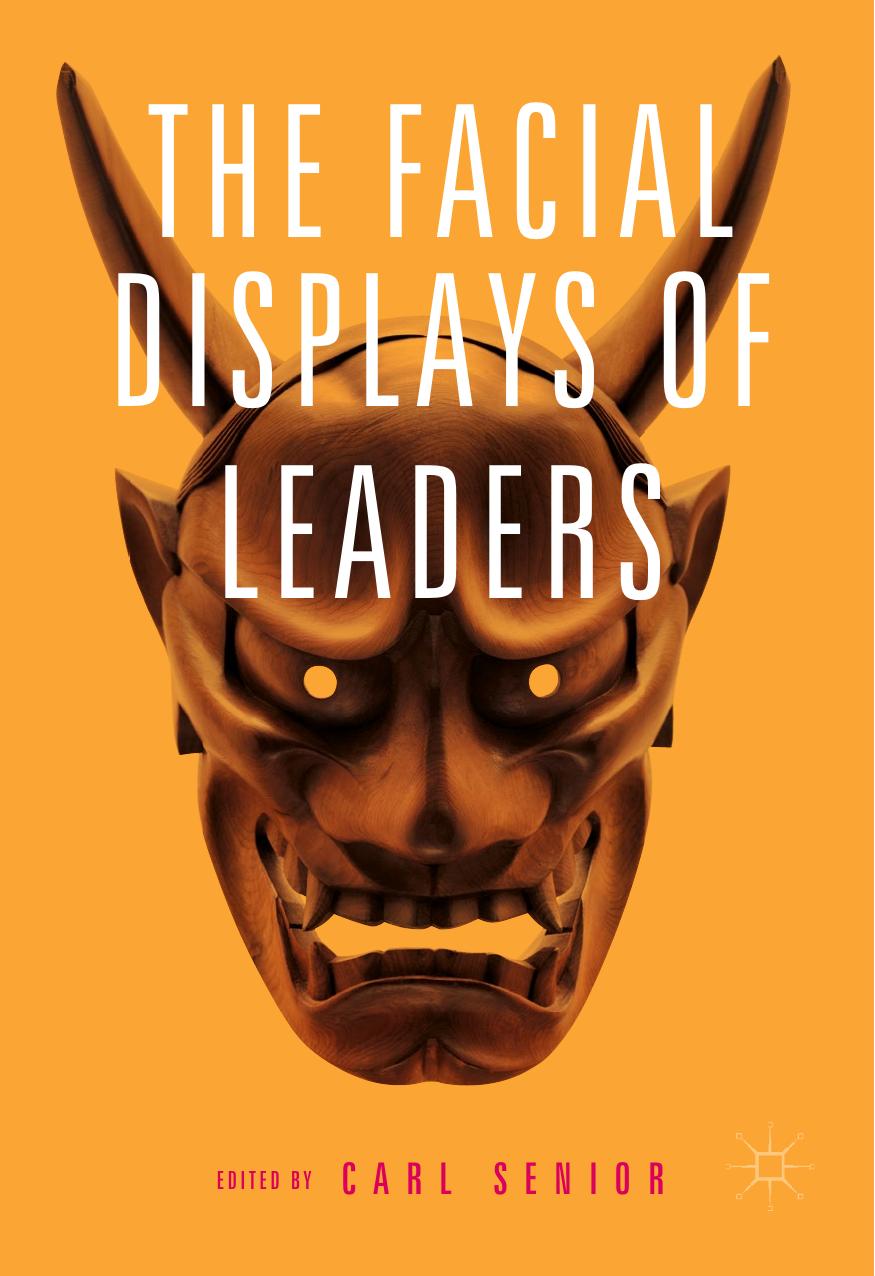
The Facial Displays of Leaders by Carl Senior
Author:Carl Senior
Language: eng
Format: epub, pdf
ISBN: 9783319945354
Publisher: Springer International Publishing
To unpack which expressive displays and nonverbal behaviors accompanied Trump’s issue and character attacks against Clinton, debate excerpts were coded for signs of aggression and submission. Since reactions to facial displays do not depend so much on the length or duration of the display, but rather the quality and strength of the expressed emotion (see Bucy & Gong, 2016; Masters, 2001), durations for nonverbal displays that occurred within attack segments were not recorded; rather, each nonverbal behavior (e.g., facial display and gesture) was simply coded as being present or absent.
Issue attack and character attack clips were divided into 10-second intervals for coding. Within these intervals, candidate behavior was coded for facial expressions (anger /threat, happiness /reassurance, fear/evasion, and staring into the camera), gestures (affinity, defiance, and brushing off the opponent), nonverbal style (agentic/assertive and communal/cooperative), and signs of physical weakness. Variable identification and coding definitions were drawn from previous research on media biopolitics (see Bucy, 2016, 2017; Bucy & Gong, 2016; Everitt, Best, & Gaudet, 2016; Grabe & Bucy, 2009). These variables were then grouped into aggression and submission displays.
When chunked into 10-second intervals, our eight identified attacks by Trump divided into 17 issue and 23-character segments. For intercoder reliability, 40% of the sample (16 segments) was double-coded by two coders. Reliability was indexed by percent agreement, which provides a simple and intuitive metric to examine coding of small samples (see Lombard, Snyder-Duch, & Bracken, 2002). Percent agreement was 100% except for stares into camera (87.5%), brushes off the opponent (92.5%), defiance gestures (92.5%), and signs of physical weakness (97.5%). The frequency of nonverbal behaviors that Trump exhibited during these attacks on Clinton is reported in Table 4.1. Screen captures of both candidates from C-SPAN’s coverage of the second and third 2016 presidential debates (see https://www.c-span.org/series/?campaign2016&nav=debates) are illustrated in Fig. 4.1.Table 4.1Frequencies of Trump’s nonverbal display behavior within attack segments
Download
The Facial Displays of Leaders by Carl Senior.pdf
This site does not store any files on its server. We only index and link to content provided by other sites. Please contact the content providers to delete copyright contents if any and email us, we'll remove relevant links or contents immediately.
Unwinding Anxiety by Judson Brewer(73414)
The Art of Coaching by Elena Aguilar(53639)
The Fast Metabolism Diet Cookbook by Haylie Pomroy(21252)
Rewire Your Anxious Brain by Catherine M. Pittman(18795)
Healthy Aging For Dummies by Brent Agin & Sharon Perkins RN(17121)
Talking to Strangers by Malcolm Gladwell(13534)
The Art of Thinking Clearly by Rolf Dobelli(10710)
Mindhunter: Inside the FBI's Elite Serial Crime Unit by John E. Douglas & Mark Olshaker(9514)
Crazy Rich Asians by Kevin Kwan(9413)
The Compound Effect by Darren Hardy(9145)
Tools of Titans by Timothy Ferriss(8590)
Periodization Training for Sports by Tudor Bompa(8414)
Becoming Supernatural by Dr. Joe Dispenza(8366)
Wonder by R. J. Palacio(8237)
Bodyweight Strength Training by Jay Cardiello(8027)
Crystal Healing for Women by Mariah K. Lyons(8003)
Change Your Questions, Change Your Life by Marilee Adams(7928)
Nudge - Improving Decisions about Health, Wealth, and Happiness by Thaler Sunstein(7850)
Therapeutic Modalities for Musculoskeletal Injuries, 4E by Craig R. Denegar & Ethan Saliba & Susan Saliba(7779)
